Xbox 360 Slim Download Speed
Download speed may not have been your top concern with your Xbox 360 since the service initially only provided small downloadable content. Now that the Games Store offers full games on demand, it's time to kick off the shackles and get your console downloading faster.
- Xbox 360 Slim Download Speed Slow
- Xbox 360 Downloads Free
- Xbox 360 Slim Download Speed Pc
- Xbox 360 Slim Download Speed Blocked
- Xbox 360 Slim Download Speed Test
The following steps will help identify whether there's a problem with your network when downloading a game or app on your Xbox One console and show you how to improve network speed.
- Learn how to troubleshoot slow game or app downloads on your Xbox One. Xbox on Windows 10. If you're still seeing a slow download speed, try the Xbox.
- In this video I will explain how you can make your download speed faster. This helps in multiple ways: Download Games from the marketplace faster Download Ma.
- Xbox 360 system updates free download - XBOX 360 Controller For Windows, Xbox 360 Controller, Xbox Game Support Updates, and many more programs. Allow Xbox 360 video game console to play games.
- Xbox 360 Forum; Xbox 360 Download Off Marketplace So Slow! Okay there is a simple and fast way to speed up the download. Go to System settings. Go to Console Settings Go to Startup and Shutdown Enable Background Downloads. Xbox 360 Download Off Marketplace So Slow!
- Xbox & games category page Microsoft Download Center. The ultimate game and 4K Ultra HD entertainment system. Xbox 360 consoles, and Windows Phone. Xbox® game support enables your Xbox 360™ video game console to play an array of games from your original Xbox video game console. A list of games that are currently.
Solution 1: Check the download speed
Follow these steps:
- Scroll to Installing… <the game title you're downloading>.
- In the 'Queue' section of My games & apps, note the download speed shown on the game or app that is being installed. This indicates the current download speed. If you're seeing slow speeds (for example, less than 1 megabit per second), it may take a long time for the download to complete.
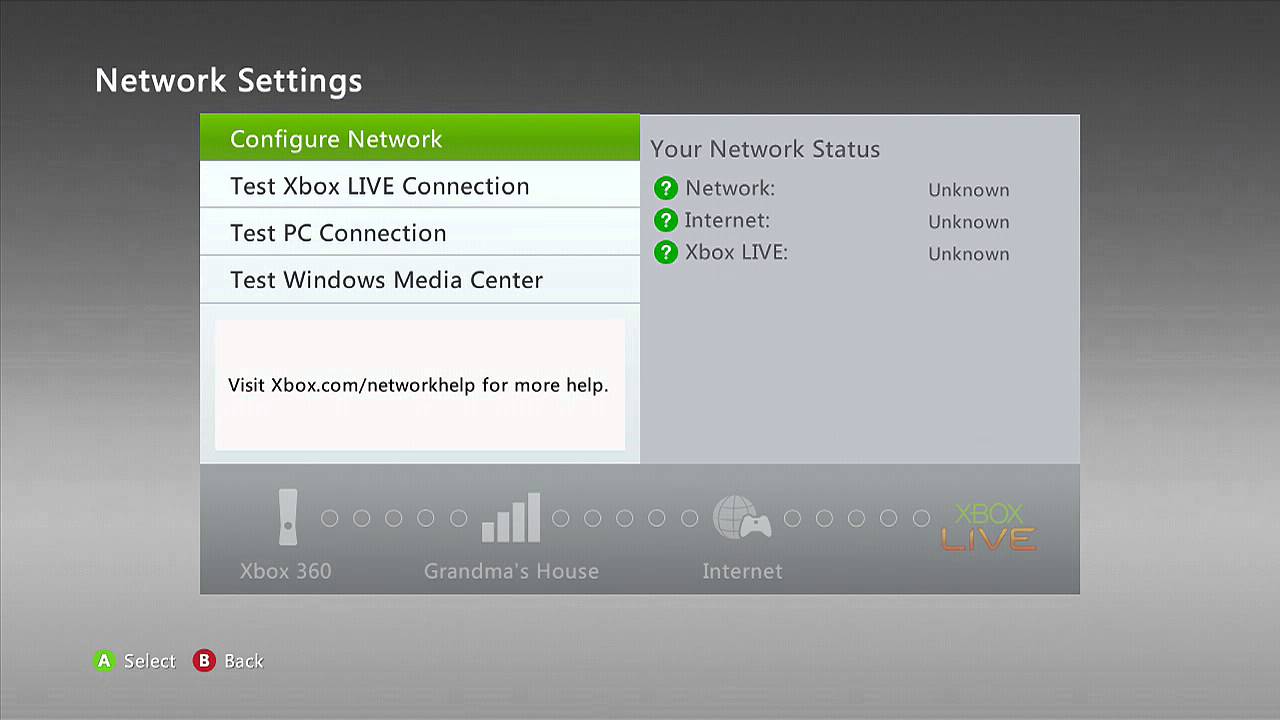
The table below represents estimated download times based on current download speed.
Note This information is intended as a guide only, not an actual representation of download time. Bandwidth will be constrained and download time will increase during activities such as streaming content, playing games, or game streaming from your Xbox One to a Windows 10 PC.Current download speed | 30-GB file | 40-GB file | 50-GB file | 60-GB file | 70-GB file |
2 Mb/s | 33.3 hours | 44.4 hours | 55.6 hours | 66.7 hours | 77.8 hours |
5 Mb/s | 13.3 hours | 17.8 hours | 22.2 hours | 26.7 hours | 31.1 hours |
10 Mb/s | 6.7 hours | 8.9 hours | 11.1 hours | 13.3hours | 15.6 hours |
20 Mb/s | 3.3 hours | 4.4 hours | 5.6 hours | 6.7 hours | 7.8 hours |
50 Mb/s | 1.3 hours | 1.8 hours | 2.2 hours | 2.7 hours | 3.1 hours |
100 Mb/s | 0.7 hours | 0.9 hours | 1.1 hours | 1.3 hours | 1.6 hours |
200 Mb/s | 0.3 hours | 0.4 hours | 0.6 hours | 0.7 hours Hindi film jai maa bisno devi mp3song download. | 0.8 hours |
Example:
If you're installing a 40-GB file and it's 25 percent downloaded (30 GB remaining) and your connection speed is 10 Mb/s, it should take about 4.4 hours for the download to complete. (This assumes that the download speed stays the same.)
While connect to Xbox Live, your connection speed should be at least 1.5 Mb/s for the best experience. For more information about bandwidth usage or to troubleshoot your network connection, see the Xbox One Network Connection Error Solution.
Solution 2: Close any running games
To provide the best gaming experience, background downloads are constrained while a game is running. To remove download constraints from games or apps being installed, you can either wait for the Xbox One to suspend the running game, or you can force games to close by doing the following:
- On the Home screen, navigate to your most recently run game.
- With the game highlighted, press the Menu button and select Quit.
Once you've closed the most recently run game:
- Check the speed at which your game or app is downloading.
- To avoid slowing your download, don't launch any games or apps until your download has completed.
Solution 3: Restart your console
- Press and hold the Xbox button in the center of your Xbox One controller to open the Power Center.
- Select Restart console.
- Select Restart. This will automatically pause any existing downloads, which will resume once the console is restarted.
Note If the console appears to be frozen, press and hold the Xbox button on the console for about 10 seconds, until the console turns off. After the console shuts down, touch the Xbox button on the console again to restart.
When you restart your console, all open apps and games will be closed. Once your console has restarted, verify that your downloads have resumed by doing the following:
- On the Home screen, open My games & apps.
- Select Queue and highlight the game or app you're trying to download.
- The game or app should show as Installing.
- If the status shows as Queued or Paused, select the game or app, press the Menu button, and then select Resume installation.
Once you've checked that your downloads have resumed:
- Check the speed at which your game or app is downloading.
- To avoid slowing your download, don't launch any games or apps until your download has completed.
Solution 4: Cancel the game or app installation and then reinstall
If the steps above didn't resolve the problem, you should cancel the game installation. Here's how:
- On the Home screen, open My games & apps.
- Select Queue and highlight the game or app you're trying to download.
- Press the Menu button on your controller, and then select Cancel.
You can then reinstall the game by inserting the disc or downloading again from Microsoft Store. To download the game again, search for and select the game in Microsoft Store, and then select Install.
Once you've restarted your download, check the download speed of your game or app again.
Xbox 360 Slim Download Speed Slow
Solution 5: Check your console’s network connection
If the previous solutions didn't resolve the problem, check to see what your console’s download speed is in comparison with your subscription plan from your Internet service provider (ISP). First, pause any running or queued downloads:
- On the Home screen, open My games & apps.
- Select Queue and highlight any games or apps that are downloading or are queued to download.
- Press the Menu button on your controller, and then select Pause installation for each game or app that's downloading or queued.
Next, close any games that are running on your system:
- On the Home screen, navigate to your most recently run game.
- With the game highlighted, press the Menu button and select Quit.
Now, run a network speed test:
- Press the Xbox button to open the guide.
- Select System > Settings.
- Select Network > Network settings > Detailed network statistics.
Your console will run a connection test and display the detected download speed, which you can compare against your Internet service provider’s subscription plan. If you’re seeing a substantially lower download speed than expected on the Detailed network statistics page, there are several possible causes:
Network contention on your home network - Network-enabled devices can compete on your home network for the same download bandwidth as your Xbox One console. Try pausing any download activity from other devices on your home network to see if that improves your console’s download speed. Also, check to see if your home router has support for Quality of Service (QoS) for its Internet connection. Enabling a QoS feature on your home router can help prioritize the network connection for your Xbox One to improve download speeds.
Wireless network contention - If your console is connected to your home network via a wireless connection, the console may be competing with other wireless devices or other wireless networks. If possible, try connecting your Xbox One console to your home router through a wired connection.
If you can't connect your console with a wired connection, check to see if your home router supports dual-band connections (both 2.4-GHz and 5-GHz Wi-Fi connections). If your home router is dual band, try moving your Xbox One console to the 5-GHz router connection and move other wireless devices to the 2.4-GHz router connection. While 5-GHz Wi-Fi has shorter range than 2.4-GHz Wi-Fi, it can also have less overlap with other wireless networks and therefore perform better.
Internet service provider network contention - Your download speed can also vary depending on the time of day and day of the week. This is often caused by ISP network contention during peak usage windows. If download speeds on your Xbox One are substantially slower during weekday evenings or weekends compared to weekday mornings/afternoons, this may be caused by ISP network contention. To work around this constraint, try starting game or app downloads late in the evening to let them run overnight, during off-peak hours.
If you're still seeing a slow download speed, try the Xbox One Network Connection Error Solution, which can help identify problems between your home network and your Internet service provider.
The Xbox 360 technical specifications describe the various components of the Xbox 360 video game console. The console features a port on the top when vertical (left side when horizontal) to which a custom-housed hard disk drive unit can be attached in sizes of either 20, 60, 120, 250, 320, 500 GB; and as of April 2015 all 2.5' SATA Hard Drives up to 2TB, the user can use the format option from system settings to utilize the new HDD. Inside, the Xbox 360 uses the triple-core IBM designed Xenon as its CPU, with each core capable of simultaneously processing two threads, and can therefore operate on up to six threads at once.[1]Graphics processing is handled by the ATIXenos, which has 10 MB of eDRAM. Its main memory pool is 512 MB in size.
- 6DVD storage
- 9Motherboards
- 11Physical appearance
Central processing unit[edit]
The Xbox 360 took a different approach to hardware compared to its predecessor. The XCPU, named Xenon at Microsoft and 'Waternoose' at IBM, is a custom triple-core 64-bit PowerPC-based design by IBM. The CPU emphasized high floating point performance through multiple FPU and SIMDvector processors in each core.The SIMD vector processor (VMX128) was modified for the Xbox to include a dot-product instruction. The dot-product instruction took far less latency than discrete instructions. The VMX128 was also modified by the addition of direct 3D (D3D) compressed data format. This led to an approximate 50 percent savings in required band-width and memory footprint making the CPU having a theoretical peak performance of 115.2 GFLOPS, being capable of 9.6 billion dot products per second. Each core of the CPU was capable of simultaneous multithreading and was clocked at 3.2 GHz. However, to reduce CPU die size, complexity, cost, and power demands, the processor used in-order execution in contrast to the Intel Coppermine 128-based Pentium III used in the original Xbox, which used more complex out of order execution. The original chip used a 90 nm process, although a newer 65 nm processSOI revision was implemented on later models, which was in-turn superseded by a 45 nm combined CPU and GPU chip. A 21.6 GB/s front side bus, aggregated 10.8 GB/s upstream and downstream, connected Xenon with the graphics processor/northbridge. Xenon was equipped with an 8th way set associative 1 MBLevel 2 cache on-die running at half CPU clock speed. This cache was shared amongst the three CPU cores.[2] Each core had separate L1 caches, each containing a two-way set associative 32-Kbyte L1 instruction cache and a four-way set associative 32-Kbyte L1 data cache. The write-through data cache did not allocate cache lines on writes. The CPU also contained ROM storing Microsoft private encrypted keys, used to decrypt game data. The heat sink implemented to cool the Xenon CPU was composed of aluminum fins with a copper base, and a heat pipe. Newer revisions, which had a smaller core, do not feature the heat pipe or copper base. The heat sink was cooled by two 70 mm fans at the rear of the console on original-style consoles, while a single fan mounted on the side of the consoles was used in Xbox 360 S consoles. There were several types of fan used in Xbox 360s, which were produced by Nidec, Sunon and Delta Electronics.
CPU data streaming[edit]
During read streaming into the CPU, a custom prefetch instruction, extended data cache block touch (xDCBT) prefetches data directly to the L1 data cache of the intended core, which skips putting the data in the L2 cache to avoid thrashing the L2 cache. Writes streaming from each core skip the L1 cache, due to its no-write allocation (avoids thrashing of high-bandwidth, transient, write-only data streams on the L1 cache), and goes directly to the L2 cache.The system allows for the GPU to directly read data produced by the CPU without going to main memory. In this specific case of data streaming, called Xbox procedural synthesis (XPS), the CPU is effectively a data decompressor, generating geometry on-the-fly for consumption by the GPU 3D core.[3]
Graphics processing unit[edit]
While the first Xbox's graphics processing unit was produced by Nvidia, the Xbox 360 had a chip designed by ATI called Xenos. The chip was developed under the name 'C1' and 'R500' was often used to refer to it.[4] The GPU package contains two separate silicon dies, each built on a 90 nm process with a clock speed of 500 MHz; the GPU proper, manufactured by TSMC and a 10 MB eDRAM daughter-die, manufactured by NEC. Thanks to the daughter die, the Xenos can do 4× MSAA, z-buffering, and alpha blending with no appreciable performance penalty on the GPU.[5] The GPU also houses additional capabilities typically separated into a motherboardchipset in PC systems, effectively replacing the northbridge chip. It has a theoretical peak of 240 GFLOPS. Due to the GPU frequently overheating in early motherboard models, Microsoft revised the GPU heat sink in order to eliminate thermal throttling.
Memory and system bandwidth[edit]
Xbox 360 Downloads Free
The console features 512 MB of GDDR3RAM clocked at 700 MHz with an effective transmission rate of 1.4 GHz on a 128-bit bus. The memory is shared by the CPU and the GPU via the unified memory architecture. This memory is produced by either Samsung or Qimonda.
The Xbox 360 has an extensive amount of bandwidth in comparison to its competition;[6] however, this statistic includes the eDRAM logic to memory bandwidth, and not internal CPU bandwidths. The eDRAM internal logic to its internal memory bandwidth is 256 GB/s. The high bandwidth is used primarily for z-buffering, alpha blending, and antialiasing; it saves time and space on the GPU die. Between the eDRAM die and the GPU, data is transferred at 32 GB/s.[7] The memory interface bus has a bandwidth of 22.40 GB/s and the Southbridge a bandwidth of 500 MB/s.
Audio and video[edit]
All games made for the Xbox 360 are required to support at least Dolby Digital 5.1 surround sound. The console works with over 256 audio channels and 320 independent decompression channels using 32-bit processing for audio, with support for 48 kHz 16-bit sound. Sound files for games are encoded using Microsoft's XMA audio format. An MPEG-2 decoder is included for DVD video playback. VC-1 or WMV is used for streaming video and other video is compressed using VC-1 at non-HDNTSC and PAL resolutions or WMV HD. The Xbox 360 also supports H.263 and H.264MPEG-4 videos. Unlike the original Xbox, voice communication is handled by the console, not by the game code, allowing for cross-game communication. There is no voice echo to game players on the same console; voice only goes to remote consoles.
Initially there were no digital video outputs such as DVI or HDMI on the Xbox 360; instead, HD-quality output could only be produced over YPBPRcomponent video (used by both the 3 RCA component cable and the Japanese D-terminal cable) and later VGA (via a software update). An HDMI port was introduced to the Xbox 360 by July 2007 with the introduction of the Elite model. All Xbox 360 SKUs currently manufactured feature an HDMI port. A wide array of SDTV and HDTV resolutions are supported by the console hardware;[8] up to 1080p after the October 2006 software upgrade.[9] While most games are rendered natively at 720p, the video from all games can be scaled by the hardware to whatever resolution the user has set in the console's settings; from 480i NTSC and 576i PAL all the way to 1080p HDTV.
DVD storage[edit]
Early production runs of the Xbox 360 are equipped with a 12x DVD drive, capable of a maximum read rate of 15.85 MB/s.[10] The original production DVD drives were manufactured by both LG and Toshiba. Beginning in November 2006, a new model the BenQ VAD6038 was introduced, which is said to run faster than the previous models and, in addition, is much quieter.[11] There is a new drive by LiteOn.[12]
Games are stored on standard dual-layerDVD-ROMs with 6.8 GB on the older XGD2 (Xbox Game Disc 2), but the newer XGD3 discs contain 7.8 GB of usable space available for game content.[13] The option to apply a regional lockout to games is available to publishers, although DVD region codes are always enforced for movies. Microsoft has implemented methods to prevent hacking through the drive. Later drive models have the external debug triggering removed and black hard glue added to cover all the chip and controller pins.[14] The drive is able to read both DVD±R and DVD±RW in addition to being able to play DVD-Video out of the box, unlike its predecessor, which required the purchase of an add-on remote. The system is also capable of playing standard CDs along with CD-R/RW, CD-DA, CD-ROM XA, CD-Extra, WMA-CD, MP3-CD, and JPEGPhoto CD.[15] Some users reported problems with the disc drive, as when a user changes the console's orientation, the inserted disc may brush against the drive's pickup assembly and incur scratches to it.[16] The users manual advises against changing the console's position while there is a disc in the drive. Other users report experiencing disc scratching during normal horizontal usage.
Announced at CES 2006 and first publicly shown at E3 2006, an external HD DVD drive was released in North America on November 7, 2006 (for US$199.99) and in Japan on November 17, 2006 (for ¥19,800). In the UK, France and Germany, the HD DVD drive was released for €199.99/£129.99.[17] The HD DVD drive was bundled for a limited time with an Xbox 360 Universal Media Remote, as well as an HD DVD copy of Peter Jackson's King Kong.[17] The drive plays HD DVD movies, although all Xbox 360 games will remain on the DVD format.[18] Microsoft had no plans to include an internal HD DVD player in future Xbox 360 designs.[19] The drive connects to the Xbox 360 via USB and contains two integrated USB ports on the rear. Games can not be played on the HD DVD drive. Microsoft has since discontinued the HD DVD add-on since the format was officially dropped by Toshiba.[20]
List of DVD drives[edit]
| Manufacturer(s) | Model | Firmware version(s) | Notes |
|---|---|---|---|
| Toshiba-Samsung | TS-H943 | MS25 MS28 | |
| Hitachi-LG | GDR-3120L | 0032 0036 0040 0046 0047 0058 0059 0078 0079FL/FK | |
| DL10N (Xbox 360 S) | 0500AA | ||
| Philips & BenQ (PBDS) | VAD6038 | 62430C 64930C 04421C | New FW after System Update 2.0.13146.0 version. (04421C) |
| Philips & Lite-On (PLDS) | DG-16D2S | 74850C 83850C v1 83850C v2 93450C 02510C | New FW after System Update 2.0.13146.0 version. (02510C) |
| DG-16D4S (Xbox 360 S) | 9504 0225 0401 0272 1071 1214 | New FW after System Update 2.0.13146.0 version. (9504 → 0272) | |
| DG-16D5S (Xbox 360 S) | A445 1175 1532 |
Hard drive storage[edit]
The Xbox 360 uses standard 2.5' SATAhard disk drives (HDDs) held within custom enclosures. These units have a custom connector to facilitate connection to the Xbox 360 and the drives themselves feature custom firmware (making stand-alone drives incompatible). The drives are detachable, making it possible to move data from one console to another, and to upgrade the size of drive on a console. The hard drives themselves are manufactured by various companies, including Fujitsu, Seagate, Samsung, Hitachi and Western Digital. Certain Western Digital hard disk drives can be modified with a program called HDDHackr to be used with the Xbox 360.[21]
The original Pro configuration of the system came with a 20 GB hard drive, which was also available to purchase separately (for the Core model, and later the Arcade model, which did not include a HDD). This was upgraded to 60 GB in September 2008, and the 60 GB HDD was also made available at retail. In April 2007, Microsoft released the Elite console, which included a black 120 GB HDD; a grey 120 GB drive was also later made available at retail. In November 2009, Microsoft released the 'Super Elite' console, as a bundle with the highly anticipated game Call of Duty: Modern Warfare 2. This console was like the typical black Elite, but with Call of Duty graphics added and for the first time included a 250 GB hard drive (which holds up to 228 GB of data after system information is stored). This was followed by various other 250 GB special/limited edition bundles. No standard (non-special edition) configuration of the original console ever included a 250 GB drive, but they were later made available at retail.
In June 2010, Microsoft announced a new version of the console, the Xbox 360 S, which used a new form factor for its 250 GB hard drives. As such, original style hard drives cannot be used in Xbox 360 S consoles, and vice versa, without modification. In June 2011, Microsoft announced a specially branded 'Gears of War 3 Limited Collector's Edition' Xbox 360 S console to coincide with the launch of Gears of War 3. At 320 GB, the included hard drive is the largest available for/with the original Xbox 360 model.[22][dead link]
In August 2014, Microsoft announced and released a new 500 GB hard drive for the Xbox 360 S console model,[23] currently the largest hard drive available for or with any Xbox 360 model.
Approximately 7 GB of a 60 GB drive is reserved for system use (4 GB of that portion is reserved for game title caching and other hard drive specific elements in games that support the hard drive, and an additional 2 GB is reserved for use by the Xbox 360 backwards-compatibility software). This leaves just under 54 GB of free space, rounded down to 53 GB in the dashboard, for saving game files, Xbox Live Arcade downloadable content, and media files (such as music and video). Similar figures apply to other hard disk drive sizes.
Other independent companies have manufactured 250 GB hard drives using hacked firmware since 2008. Many of these allegedly[by whom?] infringe trademarks of Microsoft, including the Microsoft logo, Xbox 360 logo, and the likeness of the removable hard disk drive design.[citation needed]
Networking[edit]
All versions of the Xbox 360 come with a built-in 10/100Mbit/s wired Ethernet network adapter. The Xbox 360 Wireless Adapter (identifiable as gray with one antenna) connects via a USB port and adds support for 802.11a and 802.11b/gWi-Fi.[24] This was replaced by the Wireless N Adapter (black with two antennas), which added support for 802.11n on both the 2.4GHz and 5GHz bands. The original Xbox 360 model features a pair of notches on the rear of the console, above the USB socket, to which the adapter can be attached. Alternatively, a pair of fold-out feet on the adapter can be used to stand it up separately.
The Xbox 360 S and Xbox 360 E consoles feature built-in support for 802.11b/g/n but on the 2.4GHz band only. The Wireless and Wireless N Adapters can be used on these models to add support for the 5GHz band (albeit the former losing support for 802.11n over 2.4GHz) and will, in some cases, offer '.. better range and bandwidth compared with the internal wireless feature ..'[25] If this adapter is connected, the internal wireless adapter is disabled. The S and E models lack the notches for the adapter.
Motherboards[edit]
Microsoft avoids outright announcements of new motherboard production runs and their subsequent appearance in the market in part due to uneven distribution causing buyer's remorse and to prevent purchaser delay.[26] However, several major (and many minor) motherboard revisions are introduced in an attempt to build systems more cheaply (and thus increase profits), and as a happy side effect, to allow them to run cooler while consuming less power. Note that there is no clear divide between the appearance of motherboard revisions in retail. Due to individual stock production, distribution and rotation, it may become difficult to find specific versions.[27]
Xbox 360 Slim Download Speed Pc
The power connectors on the back of these systems incorporate a 'keying' system that will prevent plugging a (newer) lower-rated power supply into an older system (which needs more power).[28] The keying system does, however, allow older power supplies to be connected to newer systems, as this poses no problem. The initial motherboard version was known as 'Xenon' and used a 203 watt power supply, and lacked an HDMI video port. The 'Zephyr' revision was largely the same aside from the addition of the HDMI port, and an improved GPU heatsink. The 'Falcon' incorporated a newer 65 nm CPU, 80 nm GPU and eDRAM, and it required less power so it came packaged with a 175 watt power supply. 'Jasper' (released late August or early September 2008[29][30]) used both a 65 nm CPU and GPU, as well as 16, 256 or 512 MB of on-board flash memory. (This was to help run a then-recent Dashboard update. Without the addition of this internal memory, a hard disk drive or memory card is required.) The 'Jasper' revision required even less power, and so the power supply was also reduced to 150 watts. Xbox 360 S introduced a new motherboard version called 'Trinity' with a 45 nm integrated CPU, GPU, and eDRAM (i.e. all in the same chip package).[31] In 2011 a second model of the Xbox 360 S motherboard has been released known as 'Corona' which integrates the HANA chip[1] into the southbridge chip.
List of revisions[edit]
| Codename | CPU | GPU | eDRAM | HDMI | Power Supply | In Production | Date Released | Notes |
|---|---|---|---|---|---|---|---|---|
| Xenon | 90 nm | 90 nm | 90 nm | No | 203 W | No | November 2005 | Original release. |
| Zephyr | 90 nm | 80 nm | 80 nm | Yes | 203 W | No | April 2007 | Introduced HDMI port and HANA chip. Introduced 80 nm GPU and 80 nm eDRAM. Improved GPU heatsink. |
| Falcon | 65 nm | 80 nm | 80 nm | Yes | 175 W | No | September 2007 | Introduced 65 nm CPU[32], Improved CPU heatsink. |
| Opus | 65 nm | 80 nm | 80 nm | No | 175 W | No | July 2008 | Available as a replacement for Xenon motherboards which have been sent in to Microsoft tech repair centers. Falcon-based. |
| Jasper | 65 nm | 65 nm | 80 nm | Yes | 150 W | No | September 2008 | Introduced 65 nm GPU. Introduced on-board flash-based memory on some versions. Further reduced power consumption. |
| Kronos (Jasper v2) | 65 nm | 65 nm | 65 nm | Yes | 150 W | No | September 2009 | Introduced 65 nm eDRAM. Introduced new 'XFreedom' RF-module, new Kronos1 GPU revision. |
| Trinity | 45 nm (combined chip) | Yes | 135 W | No | June 2010 | Motherboard redesign used in the Xbox 360 Slim. Two versions: one with 4 GB on-board storage, one without. | ||
| Corona | 45 nm (combined chip) | Yes | 115 W | No | August 2011 | No more HANA chip. Includes both Xbox 360 Slim and E versions. | ||
| Winchester | 45 nm (combined chip) | Yes | 115 W | No | August 2014 | Corona motherboard revision named Winchester motherboard, patches Reset Glitch Hack. Released with 500GB console bundles | ||
Connectivity to accessories[edit]
The Xbox 360 features three USB 2.0 ports (two on the front, one on the back).[15] The Xbox 360 S, however, has five USB 2.0 ports (two on the front, three in the back) along with a dedicated Kinect port. The Xbox 360 E has four ports (two on the front, two on the back) and a dedicated Kinect port. These are used for connection of accessories such as wired controllers, the wireless networking adapter, the Xbox Live Vision camera and USB storage devices. Although the number of wired controllers is limited by the number of ports, up to four may be used through the use of a USB hub.
The Xbox 360 also features wireless connectivity of accessories via a proprietary 2.4 GHz radio system. This is mainly used to connect the official wireless controllers, but is also used for other devices such as the wireless racing wheel and wireless headsets. With the exception of some rhythm game controllers, and the Fanatec CSR wheel, this wireless connectivity is limited to first-party Microsoft accessories.
The Xbox 360 can connect to Xbox Live over the Internet through a variety of networking interfaces.
Original style consoles also have two front-mounted memory card slots for the system's proprietary Memory Unit. These can be used to transfer profile and game data from one Xbox 360 to another. Memory Units up to 512 MB are available from Microsoft. The 'Arcade' model formerly came with a 256 MB Memory Unit, but with the Jasper motherboard revision of September 2008, the 'Arcade' model began to include 256 MB of built-in flash memory. This was later increased to 512 MB. The memory card slots were replaced with USB ports on the newer Xbox 360 S models.
The Universal Media Remote can be used to control several functions of the console, including the Windows Media Center functions if connected to the network. It communicates with the console via infrared through a receiver port on the front of the console.
All standard controllers for the system feature a 2.5 mm headset jack to allow the use of wired headsets for voice chatting. They also feature a custom USB connector, which is currently only used for connection of the chatpad keyboard accessory.
Various other accessories for the console exist, such as decorative faceplates to change the physical appearance of the console.
Physical appearance[edit]
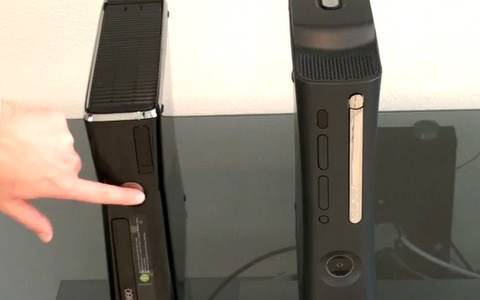
The physical outline of the original style Xbox 360 is 31 by 8 by 26.8 centimetres (12.2 in × 3.1 in × 10.6 in)[33] and is similar in form factor to its predecessor. It is slightly slimmer in every dimension and is slightly concave, while the original Xbox was noticeably convex.
It comes as standard in either black or white, with other colors available as special editions. It was designed by Astro Studios in cooperation with Hers Experimental Design Laboratory.[34] In June 2010 a redesign of the console, known as the Xbox 360 S,[35] was announced. This version of the console retains the same basic shape but is noticeably smaller and more angular than the original version. It comes as standard in either matte or glossy black; like its predecessor, other colors are available as special editions.
The front of the console features a 'ring of light' that displays four illuminated quadrants in either red or green (except the redesigned console which only has green lights). When the lights turn red, the console has encountered an error, with the number of sectors illuminated informing the user what category the error falls into. Since the redesign of the console removed the red LEDs, this error reporting system is no longer used.
The original Xbox 360 weighs approximately 3.5 kilograms (7.7 lb),[33] about 350 grams heavier than the new Xbox. The new version weighs in at 2.9 kilograms (6.4 lb).[36]
Power supply[edit]
The console uses an external power supply with a 10 A/100–120 V or 5 A/220-230 V (AC) input and DC output rated at 203/175/150/130/115 W (depending on revision). An estimated 2 W of power are used while the older versions of console are in standby mode giving a yearly usage of approximately 17.5 kWh.[37] The new version uses around 0.5W while in standby.[36] Saving the console size and weight, the power supply displaces 1,300 cubic centimetres (79 cu in).[38] Xbox 360 power supplies are designed with keys in the plug to be forwards, but not backwards compatible. For example, a 203 watt supply would fit and work on a 175 watt console, but not the other way around.[32]
See also[edit]
Notes[edit]
Xbox 360 Slim Download Speed Blocked
- 1.^ A video output chip.[39]
References[edit]
- ^'Xbox 360 Technical Specifications'. Xbox.com. Archived from the original on 2008-08-22. Retrieved 2009-09-10.
- ^Brown, Jeffrey (2005-12-06). 'Application-customized CPU design: The Microsoft Xbox 360 CPU Story'. IBM. Archived from the original on 2006-09-22. Retrieved 2006-09-30.
- ^Andrews, Jeff; Baker, Nick (2006-04-26). 'Xbox 360 System Architecture'(PDF). IEEE Micro. 26 (2): 25–37. doi:10.1109/MM.2006.45. Archived(PDF) from the original on 2017-08-08. Retrieved 2013-01-24.
- ^Baumann, Dave (2006-06-13). 'ATI Xenos: XBOX 360 Graphics Demystified'. Beyond3D. Archived from the original on 2006-11-18. Retrieved 2006-12-27.
- ^Wasson, Scott (2005-05-19). 'Embedded DRAM for 'free' antialiasing'. The Tech Report, LLC. Retrieved 2006-12-27.
- ^Douglass C., Perry (2005-05-20). 'E3 2005: Microsoft's Xbox 360 vs. Sony's PlayStation 3'. IGN. Archived from the original on 2006-09-26. Retrieved 2006-09-30.
- ^Cross, Jason (2005-05-20). 'Xbox 360 GPU Details'. ExtremeTech. Archived from the original on January 4, 2007. Retrieved 2006-09-30.
- ^McLain, Alex (2005-10-31). 'Xbox 360 High Def Details'. Microsoft Corporation. Archived from the original on April 24, 2007. Retrieved 2006-10-03.
- ^Reimer, Jeremy (2006-10-30). 'Microsoft prepares major update to Xbox Live'. Ars Technica. Archived from the original on 2018-12-22. Retrieved 2006-10-31.
- ^Bennett, Hugh. 'Understanding Recordable & Rewritable DVD'. Optical Storage Technology Association. Archived from the original on 2004-06-11. Retrieved 2006-12-18.
- ^Hill, Brandon (2007-02-06). 'Microsoft's Xbox 360 Gets New Internal Optical Drive'. DailyTech. Archived from the original on 2007-09-30. Retrieved 2007-07-06.
- ^'New Benq (LiteOn) drive in Xbox 360'. Archived from the original on 2008-05-17.
- ^Padilla, Raymond M. (2005-03-08). 'We Got Next - Part One (Xbox)'. GameSpy. Archived from the original on 2006-10-18. Retrieved 2006-11-13.
- ^Farivar, Cyrus (2006-10-05). 'Microsoft fires back at DVD firmware hack'. Engadget. Archived from the original on 2018-12-22. Retrieved 2006-10-05.
- ^ ab'Xbox 360 technical specifications'. Microsoft. Archived from the original on 2006-11-29. Retrieved 2006-09-30.
- ^Miller, Jonathan (2005-12-05). 'Xbox 360: Glitch In The System?'. IGN. Archived from the original on 2007-10-13. Retrieved 2007-01-03.
- ^ abSinclair, Brendan (2006-09-27). '$199 360 HD-DVD drive coming in mid-November'. GameSpot. Archived from the original on March 1, 2007. Retrieved 2006-10-02.
- ^Berardini, César A. (2006-08-17). 'HD DVD Xbox 360 Games: Another Rumor Debunked'. TeamXbox. Archived from the original on 2006-11-15. Retrieved 2006-11-11.
- ^Menendez, Cesar (2006-06-30). 'No Internal HD DVD Plans'. GamerscoreBlog. Archived from the original on 2006-10-20. Retrieved 2006-11-01.
- ^Magrino, Tom (2008-02-27). 'Microsoft drops 360's HD DVD player'. Gamespot. Archived from the original on 2018-12-22. Retrieved 2008-02-25.
- ^Burg, Dustin (2007-04-23). 'Save some cash, use your own 120GB HDD'. Joystiq. Archived from the original on 2015-01-28. Retrieved 2012-09-19.
- ^'Gears 3 LCE Console and Controller Announced'. Microsoft. June 7, 2011. Retrieved June 20, 2011.
- ^Moser, Cassidee (2014-08-19). 'Xbox 360 Gets a 500GB Media Hard Drive'. IGN. Archived from the original on 2014-09-19.
- ^'Xbox 360 Wireless Adapter Troubleshoot'. Microsoft. Archived from the original on 2018-12-22. Retrieved 2018-07-28.
- ^'Xbox 360 Networking Adapter'. Microsoft. Archived from the original on 2016-02-05. Retrieved 2018-07-28.
- ^Microsoft Xbox 360 Internal Memorandum 11952006; Announcement of new motherboards may cause consumers to delay purchases of existing units and some regions with slower inventory turnover may not see the newer units for some time
- ^Heckendorn, Ben (2008-11-10). 'New 65nm CPU *not found* in very new Xbox 360'. Archived from the original on 2018-12-22. Retrieved 2008-11-10.
- ^Heckendorn, Benjamin (2008-12-10). 'Inside an Xbox 360 Jasper: Ben Heck dissects the mythical console, then tells you how to find one'. Engadget. Archived from the original on 2018-02-01.
- ^'New Jasper Xbox 360 Probably Shipping First Week of September'. Seattle Post-Intelligencer. 2008-05-18. Archived from the original on 2012-08-26.
- ^Fallon, Sean (2007-10-10). 'Rumor: XBox 360 'Jasper' Motherboard Set For 8/08 Release'. Gizmodo. Archived from the original on 2019-03-26.
- ^Miller, Ross (2010-03-18). 'Leaked Xbox 360 'Valhalla' motherboard analyzed by Ben Heck'. Engadget. Archived from the original on 2018-08-08. Retrieved 2012-09-19.
- ^ abShimpi, Anand Lal (2008-12-10). 'Jasper is here: A look at the new Xbox 360'. AnandTech. Archived from the original on 2018-12-22. Retrieved 2018-01-15.
- ^ ab'Xbox 360 Technical Specifications'. Microsoft. Archived from the original on 2008-12-24.
- ^Kemp, David (2006-04-01). 'Collaboration and the creation of the Xbox 360'. Core77. Archived from the original on December 23, 2006. Retrieved 2006-12-28.
- ^Yam, Marcus (2010-06-22). 'New Xbox 360 is Actually Called the Xbox 360 'S''. Tom's Guide. Archived from the original on 2012-12-27. Retrieved 2012-09-19.
- ^ abHollister, Sean (2010-07-02). 'New Xbox 360 250GB review'. Engadget. Archived from the original on 2013-01-24. Retrieved 2013-01-07.
- ^Berardini, César A. (2006-06-19). 'Game Console Energy Consumption'. TeamXbox. Archived from the original on 2006-09-26. Retrieved 2006-11-18.
- ^Cole, Vladimir (2005-12-06). 'Xbox 360 power supply dunked in water to prove it's damned big'. Joystiq. Archived from the original on 2006-03-16. Retrieved 2006-10-03.
- ^Leadbetter, Richard (2007-06-20). 'Hardware Test: Xbox 360 Elite'. Eurogamer. Retrieved 2019-08-20.